
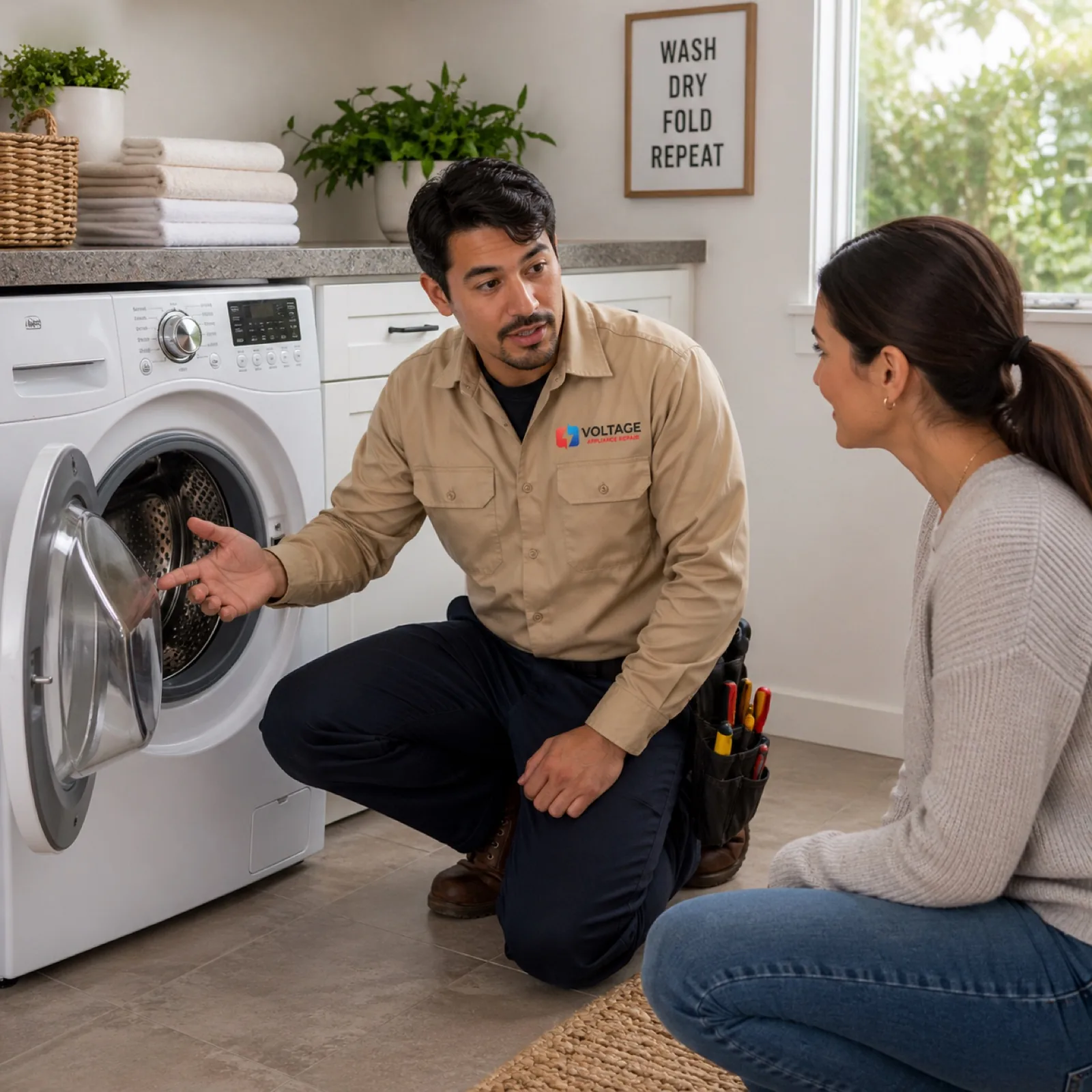
Running your dryer twice to dry one load isn't a quirk. It's a symptom. And it almost always traces back to one of two things: a clogged vent duct or a failing moisture sensor. Neither fixes itself.
Here's how to read the signs — and who to call.
Why This Happens (The Short Version)
Your dryer generates heat. It also needs to push humid air out of the drum and out of the house. If that airflow gets restricted, heat builds up, the machine protects itself by cycling off early, and your clothes stay damp.
Ninety percent of the time, it's venting. Ten percent, it's the moisture sensor reading wet air as dry. Both feel the same from the outside: clothes that need a second run.
The Lint Trap Is Not the Duct
Cleaning the lint trap is good habit. It is not a vent cleaning.
The duct runs from the back of your dryer — through the wall or under the floor — and exits through a vent cap on the exterior of your home. That run can be 5 feet or 25 feet. Every elbow, every rough joint, every inch of flexible foil tubing is a place lint can catch and compress.
Most homeowners have never had the duct cleaned. If yours is more than a year old and you've never touched it, there's a reasonable chance it's partially blocked.
How to Check the Vent Yourself
Start outside. Find the exhaust cap on the exterior wall of your home. While the dryer is running, hold your hand near the flap. You should feel a strong, consistent push of warm air.
Weak airflow — or none — confirms restriction.
Inside, pull the dryer away from the wall and look at the duct connection. If you have flexible foil duct (the silver accordion hose), check for sharp bends or kinks. These collapse over time and choke airflow almost as badly as a lint clog.
If the duct is kinked, straighten it. If it's crushed, replace it. Rigid metal duct is better long-term — fewer places for lint to grip.
When the Vent Is Clear but the Problem Persists
If airflow checks out and your dryer still leaves clothes damp, the moisture sensor is the next suspect.
Most modern dryers have two small metal strips inside the drum — usually near the lint trap housing. The machine reads conductivity across those strips to determine how wet the load is. When they get coated in fabric softener residue or dryer sheet buildup, they stop reading accurately. The dryer "thinks" the clothes are dry. The cycle ends. They aren't.
Fix: turn off the dryer, dampen a cloth with rubbing alcohol, and wipe both strips clean. Takes two minutes. Try a full cycle after.
If cleaning the sensors doesn't solve it, the sensor itself may have failed and needs replacement.
Who to Call and When
Call a vent cleaning service if:
- Airflow outside is weak or absent
- The duct run is long, has multiple bends, or you've never had it cleaned
- The exterior cap flap doesn't open during operation
A vent cleaning is a maintenance job — typically handled by an HVAC or dryer vent specialist with a rotary brush kit. It is not an appliance repair.
Call an appliance repair tech if:
- Airflow is strong but clothes are still damp after sensor cleaning
- The dryer shuts off mid-cycle before the load is dry
- You hear unusual sounds during the cycle (squealing, grinding, thumping)
- The dryer runs but produces no heat at all
Those last scenarios point to a failed heating element, thermal fuse, thermistor, or control board — components that require diagnosis and part replacement.
One More Thing Worth Knowing
A clogged vent doesn't just cause damp laundry. It forces your dryer to work harder, shortening the life of the heating element and motor. It also creates a lint buildup in the duct that is a documented fire hazard. The U.S. Fire Administration attributes thousands of residential fires per year to dryer vents.
Damp clothes after one cycle is an inconvenience. Left unaddressed, it becomes an appliance failure — or worse.
Clear the duct first. Clean the sensors. If the problem remains, call a tech.