Voltage Appliance Repair Call 786-869-3888
Same-day commercial & walk-in repair · Broward & Miami-Dade

Same-Day Commercial & Walk-in Repair.
Broward & Miami-Dade.

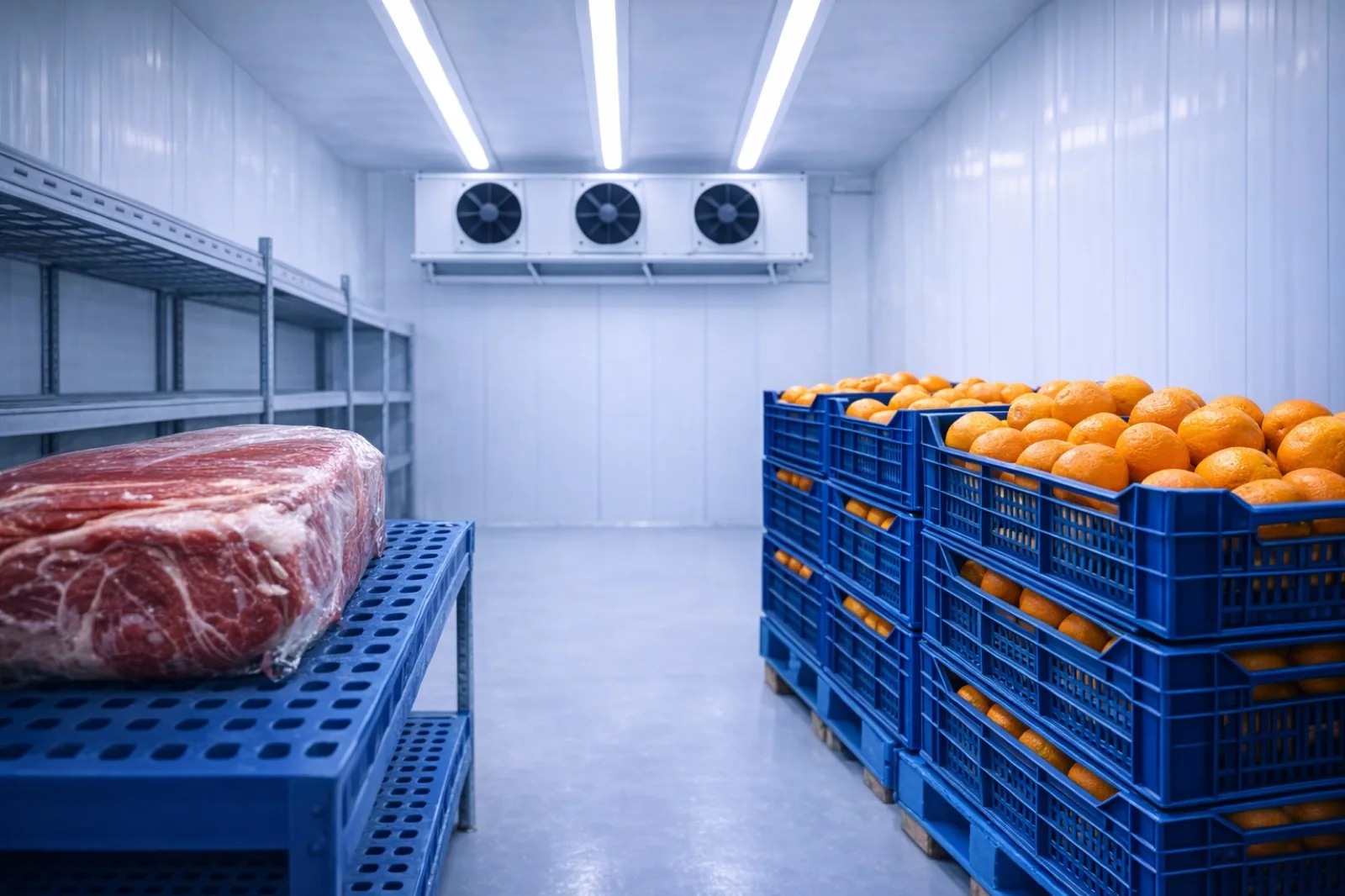
Walk-in coolers, reach-ins, ice machines, and commercial kitchen equipment across Broward & Miami-Dade. Priority dispatch for food-service businesses — because product loss doesn't wait. EPA Section 608 certified refrigerant work (Cert #819BD19B0A649A840).
Licensed & Insured Same-day service Parts & labor warranty
Commercial & Walk-in Repair by Voltage Appliance Repair
Commercial & Walk-in specialists
Today
Same-day · when available
Free
Service call with repair
7d
Open every day
24hr
Most calls handled in
Common commercial & walk-in issues

Sound familiar? We see it daily.

If your commercial & walk-in is doing any of these, don't wait for it to get worse. Same-day diagnostic, free service call when we do the repair, honest quote before any work starts.

Walk-in cooler not cold
Walk-in freezer frost buildup
Commercial oven failure
Ice machine not producing
Refrigeration compressor issues
Temperature control failure
Door seal problems
Brands we service

All major and luxury brands.

True ResidentialSub-ZeroHoshizakiManitowocTraulsenDelfieldVulcan
Why Voltage

Real techs. Real trucks. Real parts.

Free

Service call with repair

No charge for the visit when you approve the repair. If you decide not to repair, the diagnostic is $75.

1x

One visit, usually

Common parts for every major brand are already on the truck.

7d

Open every day

Monday–Sunday. A warm walk-in costs you product by the hour — we dispatch accordingly.

100%

Warrantied work

Parts and labor covered.

Service areas

Commercial & Walk-in Repair across Broward & Miami-Dade.

From the van · Commercial & Walk-in

What actually breaks in a commercial & walk-in.

What fails on a walk-in is rarely the expensive part. Contactors, run capacitors, fan motors on both coils, defrost heaters and termination switches, and plugged drain lines account for most calls where a box loses temperature, and all of them are wear items. Door gaskets and sweeps belong in a different column: a bad seal seldom stops the cooling, it runs the unit long, ices the coil, and lets the box drift through a busy shift. The condenser is the quiet culprit here, since grease and dust bind with salt air on coastal installs and corrode the fins, so the system cannot reject heat and drops out on the compressor's internal overload. Owners call that a dead compressor. Most of those compressors are fine once the coil is clean and head pressure comes down. A sealed system does not consume refrigerant, so a low charge means a leak, and topping it off buys weeks. Replacement talk starts with a burned hermetic compressor that pushed acid through the lines, or an evaporator coil leaking in several places.

Common problems we fix

Commercial & Walk-in symptoms, diagnosed honestly.

The door is not sealing or is not closing on its own. A torn sweep, a flattened gasket, a sagging hinge cam or a spent closer lets humid kitchen air walk into the box every time somebody passes, and it condenses and freezes at the threshold. On freezers the perimeter heater wire in the door frame can also fail open, which lets the gasket freeze itself to the jamb and tear or hold the door off the seal the next time it is pulled. We reset the hinge cams and the closer, fit a new sweep and gasket to that door's profile, and check the frame heater and the anti-sweat circuit for continuity before we clear the ice off the threshold. Gasket profiles vary by door manufacturer, so if yours is not a shape we stock we measure it, order it, and set it on the return trip.
On a freezer that is a defrost failure: an open electric defrost heater, a termination switch that no longer closes so the heaters never energize, or a timer or defrost board that stopped initiating cycles. With our humidity and a door that opens all shift, a coil loads up within days once defrost quits, and then air stops moving through it and the box climbs. A cooler has no heaters and defrosts on the off cycle, so ice there means the unit is running continuously and never getting the chance. We melt the coil down, then measure heater resistance and amp draw, test the termination switch, and verify the timer or board is starting the number of cycles a box that busy actually needs. Heaters and termination switches are common parts; a proprietary defrost board has to be ordered by model number, and we tell you which of the two you are dealing with before we pack up.
One or more evaporator fan motors have burned out, or a blade is cracked and out of balance, so almost no air crosses the coil. With the doors shut the box coasts on the cold mass of the product; the moment staff start opening it the system falls behind, and the still, humid air frosts the coil instead of giving up heat to it. We replace the motor and blade as a set, pull the frost off the coil, and confirm every fan in the box restarts and moves air once the compressor cycles back on. Those small evaporator motors come in a handful of frame sizes we carry, so the box is usually back down to temperature the same visit.
The contactor points are pitted or welded, or the run capacitor has fallen below the microfarad rating stamped on the can, so the compressor cannot come up to speed and drops out on its internal overload. Storm-season voltage sags are hard on both parts, and a long run of undersized wire to a rooftop unit makes it worse. We replace the contactor and the run capacitor, then compare running amps to the RLA on the data plate and check the compressor windings for resistance and a short to ground before we hand it back. If the windings test bad, the compressor itself is the repair, and that is a scheduled return with refrigerant recovery, a new liquid line drier, and the correct replacement.
Mineral scale from our hard water has built up on the nickel-plated evaporator and inside the water distribution tube, so water no longer sheets evenly across the plate and the cube never forms clear or releases clean. A worn water pump or an inlet valve that weeps between cycles produces the same wet, soft ice. We take the machine down for a full delime with a nickel-safe cleaner, clear or replace the distribution tube, sanitize the water circuit, and change the pump or inlet valve if either is the cause. Between the cleaner and the common pumps and valves on the van, that is normally one visit, and a fresh water filter afterward is what slows the scale from coming back.
Commercial refrigeration gets priority dispatch — same-day across Broward & Miami-Dade, typically within hours. Common causes: iced-up evaporator, failing condenser fan, refrigerant leak, or door gasket loss. We're EPA 608 certified for refrigerant work.
A failed defrost timer or heater, a door left ajar (check the closer and sweep), or a torn gasket letting humid kitchen air in. Frost kills airflow and compressors — worth fixing before it becomes a product-loss event.
We prioritize food-service calls because downtime costs you by the hour. Igniters, safety valves, thermostats, and door systems on Vulcan and similar lines are standard repairs for us.
On Hoshizaki and Manitowoc: scale-clogged water systems (South Florida hard water), failed water inlet valves, or a dirty condenser choking the harvest cycle. Descale-aware service plus the failed part usually restores full production in one visit.
Short-cycling, breaker trips, warm product with a running unit, or loud hard-starts. Sometimes it's just the start components — a fraction of a compressor's cost. We diagnose honestly before recommending major work.
Yes. We test and replace thermostats and controllers, verify against calibrated instruments, and leave the unit holding temp to spec — documentation available for your HACCP records.
Hugely. A leaking gasket on a walk-in can add hundreds a month in energy, ice the evaporator, and push compressors to early failure. Gasket replacement is quick and one of the highest-ROI repairs we do.
What customers say

Trusted by neighbors across South Florida.

From the blog

Repair advice from our techs.

FAQ · Commercial & Walk-in Repair

Straight answers before you book.

Most of what we do happens at the condensing unit rather than in your aisle, so cleaning a condenser, changing a fan motor, or swapping a contactor rarely interrupts service. What we need is access: a clear path to the unit whether it sits on the roof, in the alley, or in a mechanical room, and somebody with the key to the hatch or the gate. When the work is inside the box, pull product off the shelves under the coil before we arrive so the door is not standing open while you empty it.
Ice machines from Hoshizaki and Manitowoc, Traulsen and Delfield reach-ins and prep tables, Vulcan cooking equipment, and True Residential and Sub-Zero units in homes and small kitchens. Ice machines are the model-specific ones, since the descale procedure, the harvest sequence, and the control board all change from one machine to the next, so read us the model and serial off the data plate when you call and the right parts go on the van before the tech leaves.
Treat the box and the machinery as two separate decisions. Panels, floor, and door usually outlast several condensing units, so putting a compressor, a set of fan motors, or even a whole condensing unit on a sound box is money well spent, and that work carries a parts and labor warranty. What argues for a new box is wet foam: panels that have taken on water through a failed seam or a forklift dent have lost insulation you cannot restore, and on the machine side a compressor that burned and put acid through the lines, or an evaporator coil leaking in more than one spot, is a change-out rather than a repair.
Move product into a reach-in or a neighboring box first, since that is the part with a clock on it. Then see whether the condensing unit is actually running, check the breaker and any GFCI on that circuit, and make sure the door latched and nothing is stacked against the evaporator. If the coil is buried in ice or the unit starts and stops every couple of minutes, leave it exactly like that so the tech can see it, and call as early as you can, since same-day service is available when you call before 2 PM.
Commercial refrigeration calls get priority dispatch — same-day across Broward & Miami-Dade, typically within hours. A warm walk-in means product loss by the hour, and we route accordingly.
Yes — EPA Section 608 Type I certified (Certification #819BD19B0A649A840) for refrigerant recovery, recycling, and reclamation under the U.S. EPA Clean Air Act.
Yes. Businesses can pay by card on completion or arrange NET invoicing for established accounts. Every job gets a detailed written invoice for your records.
Walk-in coolers and freezers, reach-in refrigeration, commercial ice machines (Hoshizaki, Manitowoc), prep tables, and commercial cooking equipment from True, Traulsen, Delfield, and Vulcan.
Yes — scheduled condenser cleaning, door seal checks, and temperature calibration keep refrigeration off the emergency list. Call to discuss a maintenance schedule for your kitchen.

Let's get it fixed today.

Pick up the phone or book online. We'll confirm your time window within minutes.
Open 7 days · Mon–Fri 8a–8p · Sat–Sun 8a–5p
Palm Beach — 4 trucks Broward — 8 trucks live Miami-Dade — 4 trucks live
Call now Book