
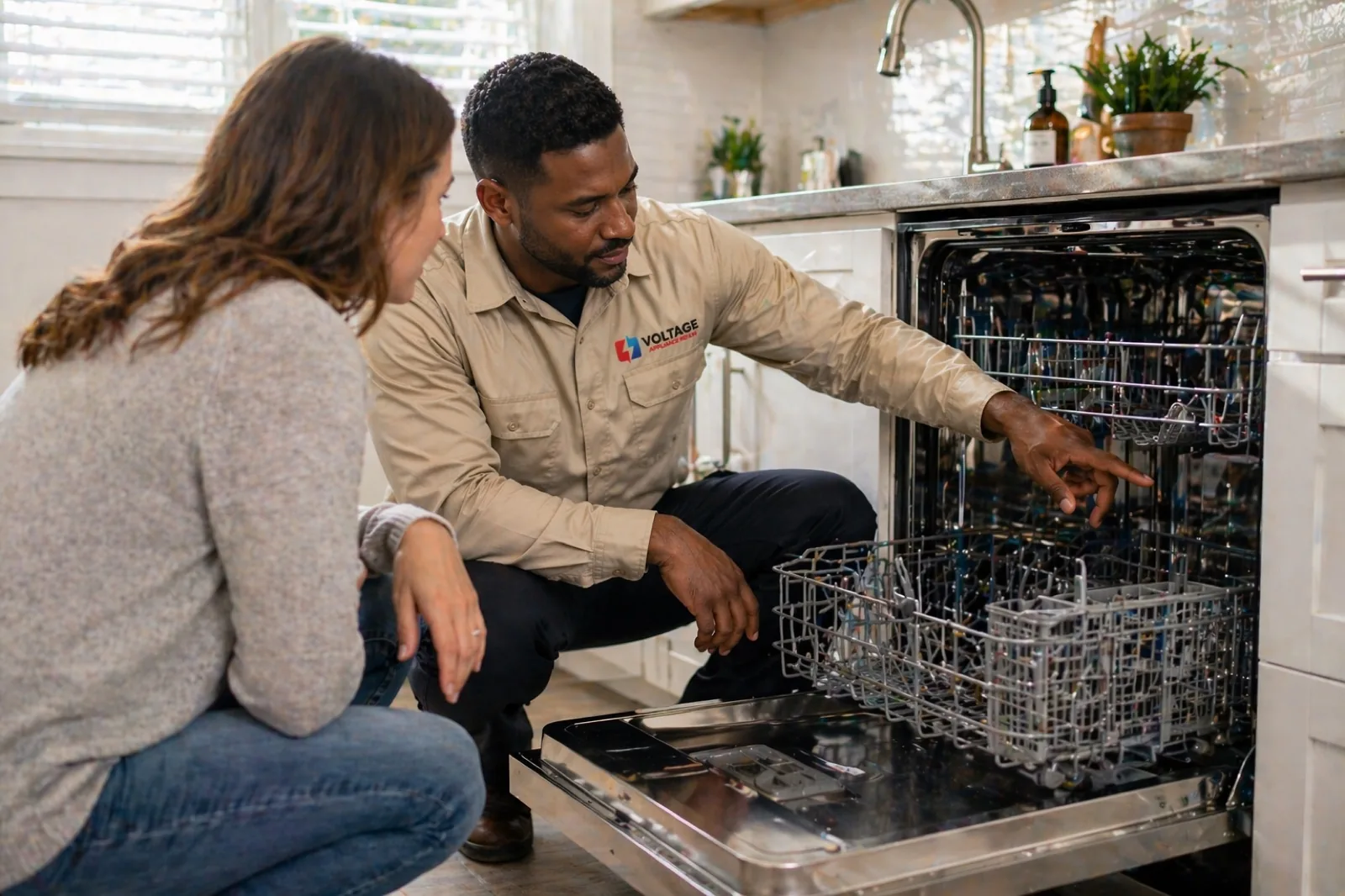
Standing water at the end of a cycle is one of the most common dishwasher complaints we see. It looks alarming. It usually isn't. The cause almost always traces back to one of four places — and knowing the order to check them saves you time and a lot of guesswork.
Start Here: The Filter
Open the door, pull out the bottom rack, and look at the floor of the tub. Most modern dishwashers have a cylindrical filter and a flat mesh screen that twist out by hand. This is your first stop.
Grease, food particles, and calcium buildup collect here quietly over months. When the filter clogs badly enough, water has nowhere to drain. The fix is a ten-minute cleaning with warm water and a soft brush. No tools required.
Eighty percent of no-drain calls trace back to this one component. Clean it every month if you run the dishwasher daily. Every six weeks if you use it a few times a week.
Do this first. Every time.
Next: The Drain Hose
The drain hose runs from the pump at the bottom of the machine to either your garbage disposal or a dedicated drain connection under the sink. Pull the dishwasher out slightly — or open the cabinet below your sink — and trace the hose visually.
Look for three things:
- Kinks. A sharp bend cuts off flow completely. Straighten it.
- Clogs. Disconnect the hose at the sink end and check for debris. A narrow bottle brush clears most blockages.
- High loop or air gap. The hose needs to loop up high before it connects down to the drain — this prevents backflow. If it runs flat or downhill the whole way, you've found your problem.
The hose is the second most common culprit. It's also usually a DIY fix if you're comfortable under a sink.
If You Have a Garbage Disposal: Check the Knockout
This one catches people. When a new garbage disposal is installed, the drain connection port comes with a factory knockout plug inside it. If your installer forgot to remove it — or if it was never connected and the plug was never punched out — your dishwasher drain has nowhere to go.
It's a five-minute check. Remove the drain hose from the disposal inlet and look inside with a flashlight. If you see a solid plastic cap, that's your problem. Knock it out, reinstall, done.
This isn't common on older setups, but after a disposal replacement it shows up more than you'd expect.
The Drain Pump: The 20% You Can't Skip
If the filter is clean, the hose is clear, and the disposal connection is fine, the issue is almost certainly the drain pump.
The drain pump is the motor that physically pushes water out of the machine. It can fail two ways:
- Debris jam. A chip of broken glass, a twist tie, a small piece of plastic — any of it can lodge in the impeller and lock the pump without burning it out. Sometimes clearing the obstruction is enough.
- Pump failure. The motor itself burns out. No amount of cleaning fixes this. The pump needs replacing.
This is the point where you stop DIYing and call someone. Not because it's complicated — it isn't. But because getting it right in one visit means bringing the correct pump for your exact model. That requires knowing the make, model number, and pump specification in advance.
When we take a drain call, we always confirm the model before we arrive. Nine times out of ten the pump is on the truck. One visit. Machine drains. Done.
The Order Matters
Work through this list in sequence. Don't start by pulling the machine apart before you've checked the filter. Skipping steps wastes time and leads to unnecessary repairs.
Filter → drain hose → disposal knockout → pump.
Most of the time you won't get past step two. When you do, you'll know exactly what to tell a technician — and what to ask them before they show up.