
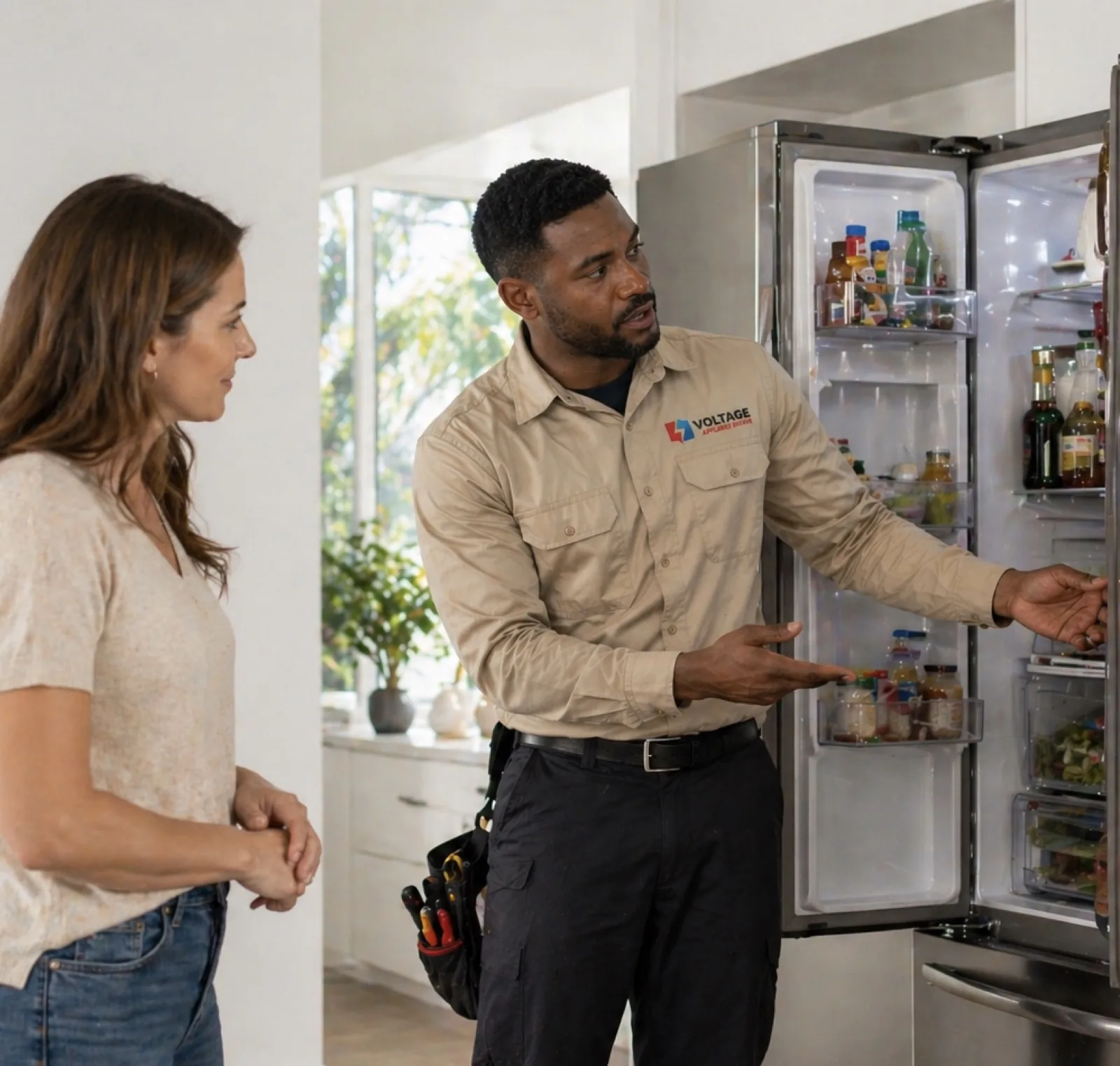
You walk into the kitchen. There's water on the floor. Your fridge is the prime suspect.
Before you call anyone, spend five minutes. The location of the water tells you almost everything. Here's how to read it.
Dealing with this right now? A free service call with your repair gets you an honest answer — fix it or skip it, quoted upfront. Call 786-869-3888 · same-day across Broward & Miami-Dade.
The Five Causes — and How to Tell Them Apart
1. Clogged Defrost Drain (Most Common)
This is the culprit in roughly half of fridge-leak calls.
Your fridge runs a defrost cycle every 8–12 hours. Meltwater flows down a drain channel at the back of the freezer compartment, through a tube, and into the drip pan underneath the unit. When that drain clogs — usually with ice buildup or food debris — the water has nowhere to go. It pools on the freezer floor, then drips down into the fresh-food section, then onto your kitchen floor.
Where the water is: Directly in front of the fridge, sometimes tracking from the inside of the freezer or fresh-food compartment.
DIY check: Open the freezer. Look at the back wall. If you see ice buildup or standing water at the base, the drain is blocked. A turkey baster with warm water poured into the drain hole (usually visible once you remove the back panel) often clears it.
Call a tech if: The drain clears but re-freezes within a day or two — that points to a defrost heater or thermostat failure that needs a proper diagnosis.
2. Water Line Leak
If your fridge has a built-in water dispenser or ice maker, it's connected to your home's water supply via a thin plastic or braided line running behind the unit.
These lines develop pinhole cracks, loose compression fittings, or pull apart slightly when the fridge is nudged during cleaning.
Where the water is: Behind or beside the fridge, sometimes pooling under the back corners.
DIY check: Pull the fridge away from the wall. Inspect the full length of the water line. Wet spots, mineral deposits (white crust), or visible cracks confirm it. Tighten the fitting or replace the line — standard quarter-inch compression fittings are available at any hardware store.
Call a tech if: The fitting connects directly to the back of the fridge (not just the wall valve) and you're not comfortable working behind the unit.
3. Ice Maker Supply Line
Similar to the main water line, but specifically the short line feeding the ice maker inside the freezer. This one is often overlooked because it's inside the unit.
Where the water is: Inside the freezer, sometimes as ice buildup near the ice maker assembly, eventually dripping to the floor.
DIY check: Open the freezer and look around the ice maker for frost accumulation that seems excessive or oddly shaped. A cracked ice maker fill tube is the usual cause.
Call a tech: Ice maker line replacements are straightforward, but accessing the fill tube on some brands (Samsung, LG side-by-sides especially) requires panel removal. If you don't have the right tools, skip the DIY here.
4. Cracked Condensate Pan
The drip pan sits underneath the fridge — usually accessible from the front toe kick. It collects defrost water and relies on the compressor's heat to evaporate it naturally. Normally you never notice it.
Cracks happen. So does overflow if the defrost system is overworking.
Where the water is: Directly under the front of the fridge, no obvious source inside the unit.
DIY check: Slide out the toe kick panel. Pull the drip pan forward. Look for cracks, discoloration, or water that's clearly overflowing (the pan should be bone dry under normal conditions — the heat evaporates everything). A cracked pan is a $10–30 part and slides right out.
Call a tech if: The pan is intact but full — that means the defrost system is producing more water than the compressor heat can evaporate. That's a symptom, not the cause.
5. Door Seal Failure
A worn or torn door gasket lets warm, humid air into the fridge continuously. That humidity condenses on cold surfaces inside, then drips to the floor.
Where the water is: Along the front base of the fridge, sometimes visible as condensation on the exterior door or sides.
DIY check: Close the door on a piece of paper. Pull it out. If it slides out without resistance, the seal is failing. Run your hand around the full perimeter of the door — you'll feel warm air if there's a gap. Also check for visible tears, hardened rubber, or sections pulling away from the door frame.
Call a tech if: The gasket needs full replacement. It's a manageable DIY on some models, but getting the seal seated correctly requires patience and often a heat gun. A bad install means the problem returns in two weeks.
The Rule of Thumb
Water from the front, no visible source inside → condensate pan or door seal.
Water from inside the freezer or fresh-food section → defrost drain or ice maker line.
Water from behind the unit → supply line.
Five minutes of looking saves an unnecessary service call. Most defrost drain clogs clear themselves with warm water. A cracked drip pan is a hardware-store fix. A faulty water line fitting takes twenty minutes.
What you can't easily fix at home: defrost heater failures, refrigerant issues, compressor problems, or anything that requires pulling sealed components. If the water keeps coming back after you've addressed the obvious cause, that's the signal.
Stop guessing at that point. Call a real tech and let them confirm it.