
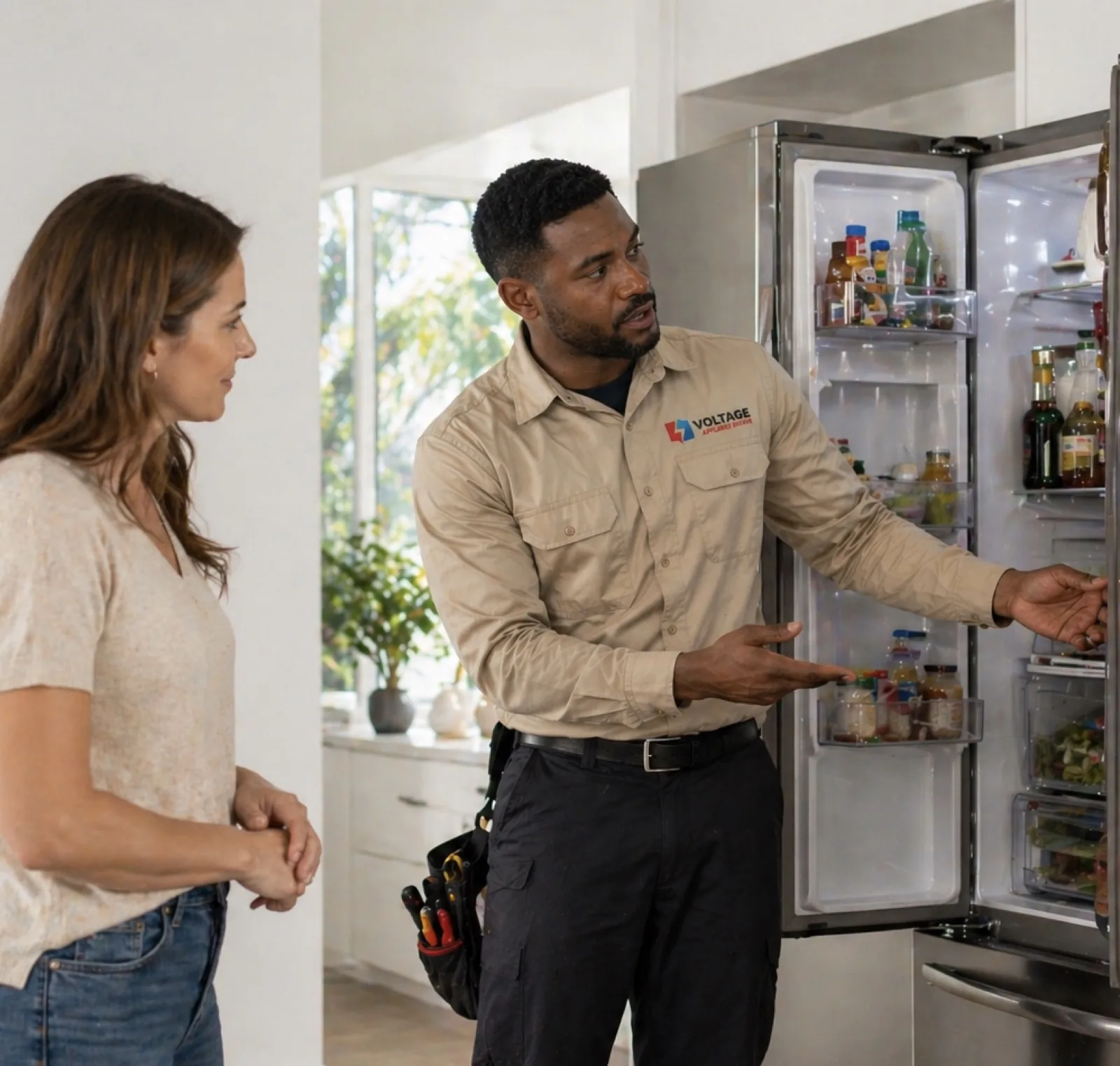
Your Samsung fridge is running. The freezer is fine. But everything on the top shelf of the fresh food compartment — eggs, leftovers, produce — keeps freezing solid. The bottom shelf is normal temperature. The rest of the fridge feels okay.
That pattern is specific. And it points to one place.
Dealing with this right now? A free service call with your repair gets you an honest answer — fix it or skip it, quoted upfront. Call 786-869-3888 · same-day across Broward & Miami-Dade.
The Symptom Is a Clue, Not a Coincidence
In a Samsung refrigerator, cold air enters the fresh food compartment from the top. It flows downward, cycling back out near the bottom. When the system is working correctly, the air is distributed evenly and the damper — the small door that controls airflow from the freezer into the fresh food section — opens and closes based on temperature demand.
When the top shelf freezes and the bottom doesn't, cold air is flooding in at the top and not stopping when it should. That's a damper problem. Or a control board problem. Or both.
What the TWIN Cooling System Actually Does
Samsung's TWIN Cooling Plus design keeps the freezer and fresh food compartment on separate evaporator circuits. The idea is to prevent odor transfer and maintain better humidity in the fridge section. In practice, it also means the fresh food side has its own dedicated damper that controls airflow independently.
That damper is motorized. It takes signals from the main control board. When the board tells it to close, it closes. When the board tells it to open, it opens.
The problem: the damper motor can stick in the open position. Or the control board firmware sends the wrong signal — telling the damper to stay open even when the fresh food section is already at temperature.
Either way, result is the same. Cold air keeps pouring into the top of the compartment. Top shelf freezes. Bottom shelf doesn't. You think something is wrong with your ice maker or thermostat and spend three weeks adjusting settings that don't fix anything.
Why Adjusting the Temperature Setting Doesn't Help
This is the most common mistake. You raise the fresh food temp from 37°F to 40°F. The bottom shelf warms up slightly. The top shelf is still freezing. Now you've got uneven temperatures across the whole compartment and nothing is right.
Temperature settings don't fix a stuck damper. The damper is mechanically or electrically stuck open. The board is sending bad commands. Raising the setpoint just adjusts what the board is targeting — it doesn't change the fact that the damper can't respond correctly.
Some Samsung models also have a known firmware issue where the control board misreads the thermistor near the fresh food duct. The board thinks the section is warmer than it actually is. It keeps the damper open to compensate. The fix in those cases is a board update or board replacement — not a setting change.
The Two Parts at the Center of This
The damper assembly. On most Samsung French door and side-by-side models, the TWIN Cooling damper is located behind the upper rear wall of the fresh food compartment. It's accessible but not obvious. A tech will check whether the motor is receiving voltage, whether the flap opens and closes on command, and whether it's physically obstructed by ice buildup — which itself can indicate a defrost cycle issue.
The main control board. Replacement boards on Samsung refrigerators are not cheap. That's why diagnosis matters before replacement. A tech with a proper DC voltage tester can verify whether the board is sending the correct open/close signal to the damper before ordering anything. A stuck damper on its own costs a fraction of a board replacement.
Swapping the board without confirming the damper is functional is an expensive guess. A tech who tests first saves you from paying for the wrong part.
Ice Buildup Makes It Worse
A stuck-open damper often triggers a secondary problem: ice accumulation around the duct opening. The constant cold air creates a frost buildup that physically blocks the damper from ever closing properly — even after the electrical issue is resolved.
If your fridge has been running like this for weeks, there's a good chance the damper area has ice around it. That ice needs to be cleared before any part is replaced. Otherwise the new part fails the same way the old one did.
When to Call
The symptom is clear: top shelf freezing, bottom shelf normal, temperature adjustments not helping. At that point the diagnostic path is defined. A tech checks damper function, checks board output, checks for ice buildup around the duct.
Most Samsung damper repairs are completed in one visit. The parts are stocked for common models. If the board needs replacement, a confirmed diagnosis means you're ordering the right board — not experimenting.
Don't let a stuck damper turn into a full board swap. Get it tested first.